

I’ve had the privilege of coming across some absolute corker horror novels this year – some by familiar old work-horses, as well as some awesome new voices – but of all those books in the past year, a handful really got under my skin and left an impression I won’t soon forget.
Most of the books listed here weren’t published this year; I’ve only come across them this year. With that in mind, here are my top five horror reads from 2025 that, like a splinter, have remained lodged in my mind long after I’ve set the book down, seeping infected blood all the way down into my dreams.
Maeve Fly – C J Leede
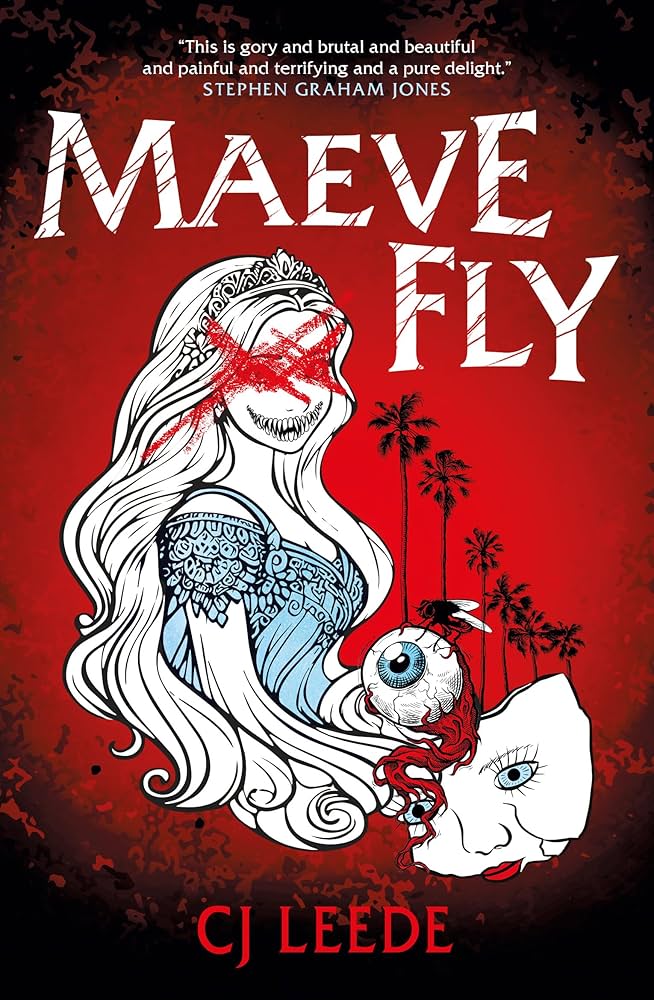
Billed as a “feminist American Psycho“, I was pleasantly surprised to discover Leede’s deliciously gory debut was not at all boring like the book that inspired it. (I do love American Psycho, BTW, but we can all acknowledge that much of that narrative is mind-numbing as hell – by design.)
Maeve is a snark-filled misanthrope who plays a Disney princess by day, but by night frequents dive bars with a book in hand, drawn inexorably to the macabre, possessed of a frosty demeanour. Her strange relationship with her enigmatic, aloof Hollywood starlet grandmother may go some way to explaining Maeve’s temperament – that is, until Gideon, the brother of Maeve’s coworker, arrives in town and sets something alight in her – something unfamiliar and uncontrollable. We see her icy humanity thaw into something more passionate, playful and wicked – a bloodthirsty succubus where there is no limit on the excesses and depravities she’ll engage in, and the results are… horrifying. Grotesque. Oddly sexy.
The writing is sharp, sardonic, witty, a lurid reflection on the obliviousness (or indifference) of modern society. It’s in this we see the thematic parallels between Maeve Fly and American Psycho in their respective cultures and contexts. The influence of the latter is intentional, referenced many times; as much an indictment as it is a love letter to Brett Easton Ellis’s cult classic: a reminder that the more things change, they more they stay the same. Maeve Fly, in my opinion, is a much more readable and enjoyable contemporary of that novel, that cuts the fluff and yet still manages to shock and horrify in a way that would leave Patrick Bateman winded and gasping for air.
Disappearance at Devil’s Rock – Paul Tremblay
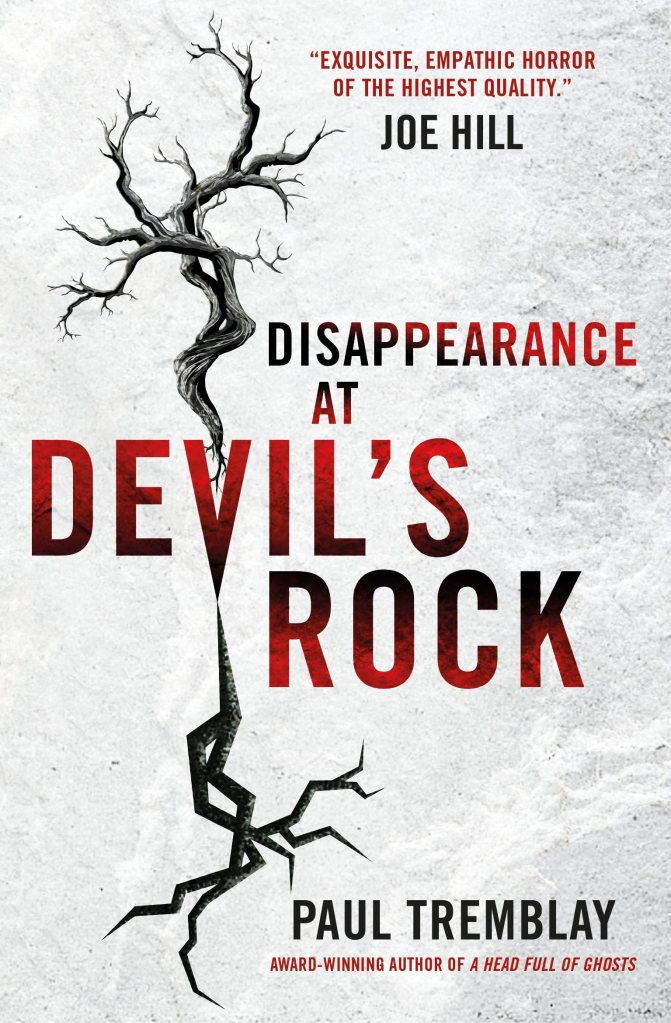
Disappearance at Devil’s Rock was an understated gem for me – that rare blend of psychological horror with a whiff of the supernatural that brings with it a minimum of spilled blood but absolutely chills you to the core… because it touches on something so real and palpable.
13 year old Tommy Sanderson suddenly vanishes without a trace one summer evening in the local woods, manifesting every parents’ worst nightmare. His mother, Elizabeth, desperately searches for any information pertaining to her son’s whereabouts. Neighbourhood residents reports signs of a dark figure flitting through backyards and behind fences near the woods. Elizabeth clings to hope that Tommy is still alive, albeit hiding for reasons she cannot fathom. His friends are oddly quiet and unhelpful on the subject. Police and search and rescue teams find no sign of him in or around the forest. Despair begins to take hold.
Then strange things start happening around the Sanderson house: unexplainable dirty footprints trailing through the house from the backyard; pages from a secret journal Tommy kept turn up in odd places a page at a time, hinting at disturbing events leading up to his disappearance… and the advent of a shadow apparition that looks remarkably like Tommy hiding in dark corners of the house.
A truly horrifying, heartbreaking story of the follies of youth, the dangerous influences that can lead them astray, and the hollowing and often strange navigation of loss and grief, this novel was probably the least graphic of the five here, but – probably because I am a parent myself – the one that probably hit me the hardest. Paul Tremblay is a master of the subtle horror tale.
The Outsider – Stephen King
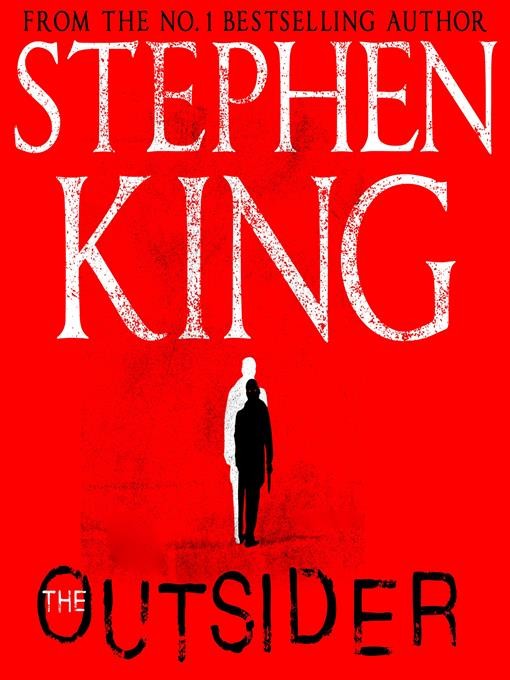
I have been a Stephen King fan since the tender age of 8, but I’ll be the first to admit I haven’t read as many of King’s works from 2010s and 2020s. Partly due to an overflowing TBR pile, and lots of competing authors, but partly because I’ve felt something of the magic has faded in his later books. It’s hard not to compare his contemporary works with the alcohol and coke-fueled mayhem of 80s classics like IT and The Stand, or lesser-loved gems from later years like The Tommyknockers, Desperation and Duma Key , but it’s inevitable. The Outsider is probably the first of King’s 2010 works that really slammed me in the face with its creativity, its genuine air of mystery, characters that leap large off the page, and a unique and terrifying twist on an already terrifying boogeyman.
The novel opens with the horrific murder and desecration of young local boy, Frankie Peterson. The scene is littered with evidence: fingerprints, DNA, and a slew of eyewitnesses – sloppy in a way only an impassioned, fevered killer might be. All evidence points conclusively to local teacher and Little League baseball coach Terry Maitland, and detective Ralph Anderson makes a quick arrest. He thinks it’s an open and shut case, until Maitland is able to provide airtight evidence that he was at a teacher’s conference with other eyewitnesses 100 miles away at the same time on the same day as the murder. The Flint City cops are baffled: how can a man be in two places at once?
After a tragic mistake brings the case to an abrupt halt, and so many questions left unanswered, Ralph – along with Maitland’s angry wife Marcy and a team of detectives and private investigators (including Holly Gibney, King’s favourite recurring character from Mr Mercedes and other novels) – set out to find the truth. What they find is a string of similar cases and accused murderers across the American Midwest – also with incontrovertible proof they had committed the ghastly crimes, yet who also had airtight alibis – who might have been proven innocent, if anybody had delved a little deeper, and if they hadn’t all died each under incredible circumstances. The investigators soon find themselves on a collision course with a supernatural force of nature that makes a sport out of causing death, misery and grief before disappearing.
The novel also spawned an incredible HBO adaptation that, in my mind, far exceeds the book. But regardless of the format, King has woven a suspenseful, horrifying tale that also lets a fundamental, flawed humanity of his characters shine amidst the violence and carnage.
Come Closer – Sarah Gran
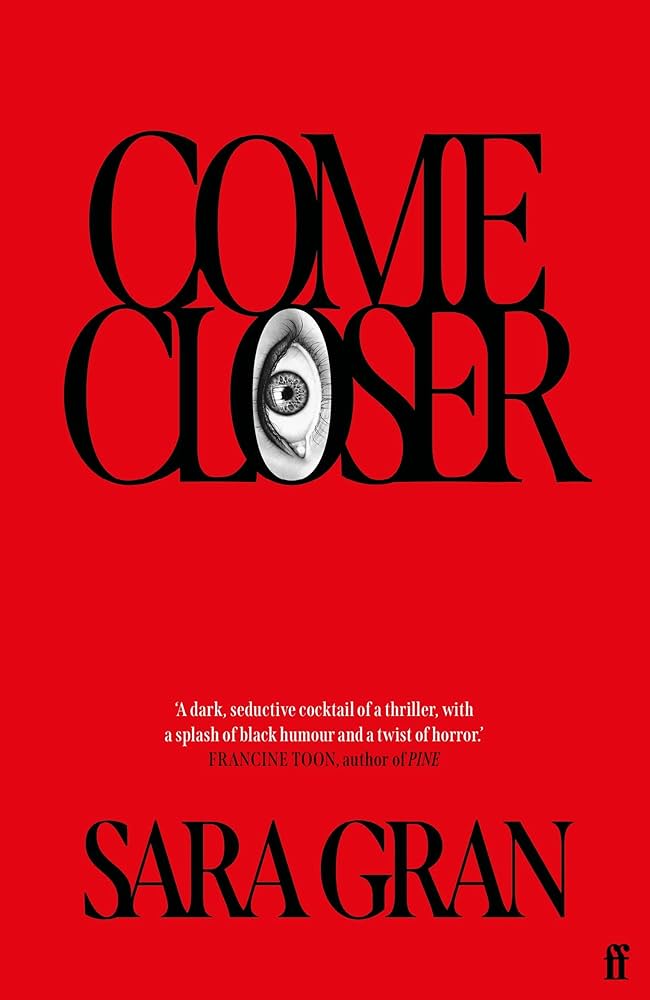
I went into this one blind, grabbing it off the shelf at the bookstore where I work on impulse, and wow. This short little novel was an absolute joy to read: it didn’t overstay its welcome, it had some strong themes and ideas and managed to make me shiver with its tight, evocative delivery, while also subverting many of the well-worn possession story tropes.
Come Closer follows Amanda, an architect living in the city with her button-down, inoffensive husband. The story opens with her being summoned to her boss’s office and confronted with a renovation proposal that, it turns out, is rather an expletive-laden rant about him. Amanda has no clue how it got there and can’t remember writing it, even though she certainly feels that way. What follows is a slow Fight Club-esque descent from the picture-perfect mundane into a dissociative split between her projected image and her repressed desires, manifesting in out-of-character behaviours that grow increasingly unpredictable, upsetting her work and home life. She hears unexplainable tapping in her apartment walls. She starts shoplifting, smoking, and frequenting bars and sleeping with strange men. Other, darker pleasures and transgressions soon follow.
But the question of whether this is a mental break does not persist for long – at least on the page. Gran makes it clear very early on that Amanda is the subject of obsession, and later possession, by a demon named Naamah. (If you’ve not heard of this demon before, she has much in common with Lilith and other succubi.) Naamah is sensual, lustful, impulsive and unrestrained; the polar opposite of Amanda, who is repressed and unassertive, desiring passion but receiving little of it in her own life and marriage. And little by little, we start to see Naamah taking over – in the windows between fugue states, where the worst things happen, Amanda begins to feel like little more than a hapless passenger; unable to (but not always wanting to) fight against Naamah’s darkest desires. In them, Amanda is finding release, a passenger vicariously slaking her own unmet needs.
The tale and its themes of repression, sensuality, femininity, and expectations of women acting in a particular manner, wherein any deviations from this standard devalues them, is powerfully executed. It also leaves the question, even at the end, of whether Amanda really is possessed or if it’s all a manifestation of her own psyche, for the reader to decide. It is an economical, horrific tale with almost no fluff, managing to reach deep into your ribcage and scoop out your heart and lungs, while the demon lifting the organs out smiles over the steam and still somehow leaves you grateful for the experience.
Horrorstor – Grady Hendrix
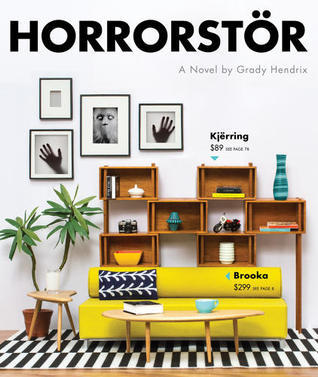
IKEA shoppers, beware! You might never look at your favourite furniture emporium the same again!
I picked this one off the shelf because the unique format caught my attention – it’s presented as a IKEA-style catalogue in shape, size and internal layout, with ads for familiar Swedish-style furniture items often with puns for names. It’s a bit of a gimmick, but it’s eye-catching, and you’ll see why it’s a great choice after about the halfway mark when the form begins to tie more closely into the story.
Amy, an ORSK (the name given to Hendrix’s fictional IKEA-clone) employee who hates her job, along with another employee, are offered a high-paying, off-the-books gig: to stay in the ORSK complex overnight and investigate a series of strange nocturnal events that seemingly have no reasonable explanation. Each morning employees arrive at the store to find furniture tipped over, foul smells and stains all over the place. Amy and Ruth-Anne are joined by their manager, Basil, and later by fellow employees Trinity and Matt, “stowaways” on the mission who are documenting the rumoured supernatural incidences in the hope of creating the pilot for a ghost-hunting TV show.
After they discover a homeless man who frequents the store by day hiding within the store, the group arrives at the conclusion he is responsible for the nocturnal disruptions. But things quickly intensify and disprove this explanation. What follows is a sudden and harrowing descent into a dilapidated hell ripped straight out of Silent Hill, and the nonthreatening, cookie-cutter aesthetic of their workplace becomes hostile Beehive of activity. (I have capitalised this for reasons I won’t explain – no spoilers!) The group find themselves at the mercy of a malevolent supernatural force they cannot hope to match.
What’s cool is the furniture ads began to deteriorate in tandem with the story: once-familiar chairs, desks, and other furniture devolve into medieval-style torture devices that challenge the limits of pain and suffering with their depraved creativity, much in the same way as ORSK/IKEA stores try to inspire their customers with their catalogues. It’s a clever and entertaining touch that adds an extra layer of character to the place and overall story. This novel is a psychological terror you don’t want to sleep on.
 Marcus Turner
Leave a comment