Sometimes you’ve just got to let a good idea marinate. It seems to fly in the face of writer wisdom – show up every day, pump out words every day, don’t stop. Sometimes, though, this isn’t always the best advice. Sometimes things stir in the slow and the quiet. I stopped trying to control my output, the development of the project – I did show up, most every day, and if you’re confused about these seemingly contradictory messages, I’ll explain shortly what I mean. Fast forward 2-3 months of solid, earnest work, and things have begun moving very fast.
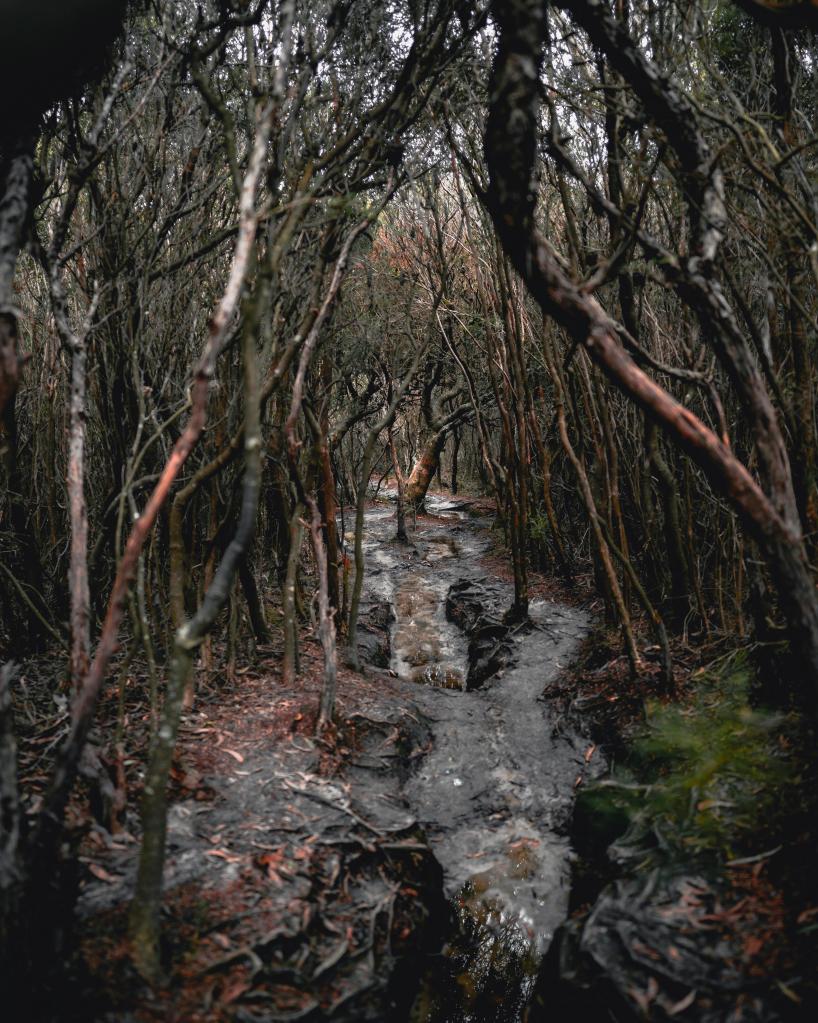
Discordia hasn’t been gestating quite as long as some of my other novels. The idea for a horror novel set in the forest somewhere in Australia was kicking around for a little while, but a cohesive idea of what it would actually look like – characters, enemies, location, spooky stuff, themes, plot etc – I had not. I didn’t have to pants this one for long before realising I had no idea where the fuck I was going with it. Some of my more notorious works in progress – that people in both my professional and private life have heard me complain about – have been sitting in manuscript hell for years at a time, either due to a lack of comprehensive planning, or too much planning.
What I love about writing is having an idea or an incomplete image of the story – you might have a character or a few really strong scenes that really just claw at you from the page – and then venturing out into that black void in the spaces between and filling in the gaps. Sometimes we feel compelled as writers to force what comes next, to scratch something out of the darkness that later ends up feeling inauthentic or contrived. Probably what would should be doing, when things aren’t moving under our guidance, is just to let them sit for a while.
I know some people will see that as the dread writer’s block; others who know me personally and seen my fluctuating work patterns over the years (which is the life of a bipolar writer, for the record!) might see this as simply bad advice. But I will cite the master, my ideal mentor Stephen King, who talked about this very idea in his memoir On Writing. In it, he talked about discovering the bones of the story, like a paleontologist brushing away dirt from the bones, assembling the skeleton one piece at a time – and doing so organically. But what does this really mean?
What? I hear you scream. Writers make up all the components of their stories!
Well, yes… and no. Perhaps controversially, I believe stories exist almost or entirely fully formed before the time we start unearthing them.
No, I don’t mean as in God or gods or aliens have laid them before us as a waypoint to artistic destiny, Heavens no. I think it means through a synthesis of our ideas, imagination, cultural and media literacy, our life experience, beliefs and values, the stories we tell were always the stories we were going to find and tell. They are our bones in the earth we’re excavating.
But in a more pragmatic, less philosophical sense, it means Don’t stop writing, but Discover, Be curious, or Become playful. Whenever I’ve over-planned or forced plot or character development, the story starts feeling stilted and ugly. Whenever I’ve gotten a little slipshod with my planning, yeah, sure, the plot and characters develop organically, but they meander and lack focus. (And I usually blow out on words, which makes it a nightmare to later revise – I’m looking at you, Land of the Righteous!)
So again, what am I saying here? What am I advocating? Well, as a result of becoming playful when I hit a wall, I took a break from writing in a serious, self-flagellant manner and just… doodled with some ideas. I never stopped working or thinking about it: I let things percolate, simmer and coalesce; I sketched out what if scenarios, mini-segues within the framework of my story setting and let the characters play and the events unravel. How did they work to better convey character or propel the plot? I sat with myself for long spells and asked myself, what does this idea mean? Why this place, these characters? Why this horror? What’s going on inside me that connects? And it’s that final inquiry that brought all the pieces of Discordia together and, almost overnight, populated those black empty spaces with the subtle and not-so-subtle horrors I always knew were lurking there.
Taking a break or slowing doesn’t mean stop, or stopping for a long time and losing momentum. I know too well how easily that can happen and am acutely aware of it with my own practice. But those quiet moments are often the most valuable times for you as a writer and the word-baby you’re trying to birth. You need to breathe, slow down, and let the work speak for itself.
Realise you are not always the creator, but the conduit. The broadcast tower and receiver for something that already exists and breathes in its own right.
That’s what happened with Discordia. Even with my limitations of time and energy, I was putting words to paper almost daily and making headway, even if in smaller jags. But more than just word progress, I was making quality progress – the ideas had been marinating when they needed to, even when I couldn’t find the means to express them, because I knew when to let go of the wheel. Reading it back, I’ve been really feeling how real the horror of the tale is; how affecting and earnest its themes are, and that what I have to say is meaningful. This is a far cry from where I’ve been in the past – doubting my authenticity as a writer and my skills – and I give credit for this change in perception to those quieter moments I’ve incorporated into my practice. I put all the shit self-talk aside and just kept showing up, even if it was for 500 words, even if all it seemed I did was play.
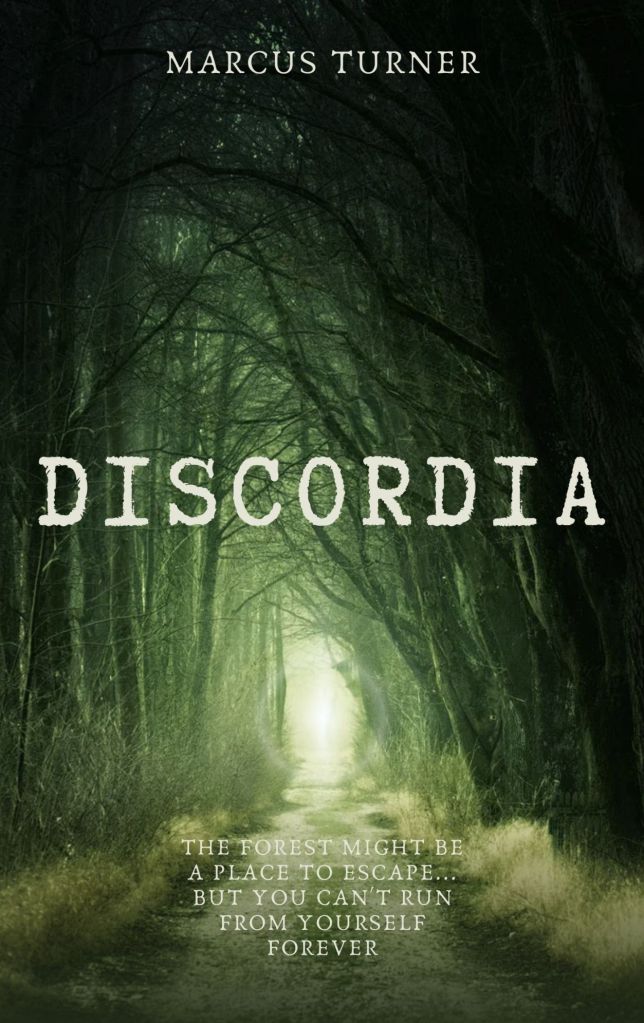
*Demo cover I designed for a uni assignment. Not the final cover
I say seemed because that’s how it was: sometimes the work didn’t look like much, but in that space between the stars, things were moving, and soon I’d be an active part in their revelation.
Discordia is now such a deeply personal story of psychological horror brought about by one small but significant addition – a very special secondary character – that truly spoke of my deepest fears as a person, as a parent. It’s a study in the nature of grief, of mental illness, of love and of change. I call it a Silent Hill meets (Adam Nevill’s) The Ritual crossover, where external horrors draw out the horrors within us.
I am so pleased with how well this project is coming along. I am deep in the guts of it now, almost past the point of no return – and I can’t for the day I can finally share it with all of you.
 Marcus Turner
Leave a comment